How to Identify Household Cleaning Products: 2026 Guide
Table of Contents
- Why Identifying Cleaning Products Matters More Than You Think
- The 5-5-5 Rule: A Simple Framework to Identify Household Cleaning Products
- Decoding the Label: How to Read Cleaning Product Labels
- Toxic Ingredients in Cleaning Products to Avoid
- Spotting Truly Eco Friendly Cleaning Products in Australia
- Matching the Product to the Surface and the Job
- Safe Storage and Disposal of Household Chemicals
- Conclusion: Build a Simpler, Safer Cleaning Routine
- Frequently Asked Questions
Last Updated: September 9, 2026
Why Identifying Cleaning Products Matters More Than You Think
Most of us grab a bottle from under the sink without a second thought. Yet the average home stores a surprising array of chemicals, and knowing how to identify household cleaning products is the first step toward a safer, healthier routine. This guide breaks down what to look for, so you can shop with confidence and avoid hidden hazards.
The stakes go beyond a fresh scent. Many conventional cleaners release volatile organic compounds (VOCs) that linger as indoor air pollutants long after you finish wiping a bench (the EPA). For households with children, pets, or anyone sensitive to strong fragrances, that residue matters. Learning to read a label properly protects your family and your surfaces.
Below, we'll show you a simple framework to identify what's in any product, decode label jargon, and spot genuinely safer alternatives. We'll also cover matching a product to the job and disposing of old chemicals.
The 5-5-5 Rule: A Simple Framework to Identify Household Cleaning Products
The fastest way to identify household cleaning products is to use the 5-5-5 Rule. Before you buy or use any cleaner, check five key details, take five seconds to assess the risk, and consider five common ingredients to avoid. This quick mental checklist turns a confusing aisle into a manageable decision.
Here is how the framework works in practice:
- Check the signal word: Look for "Caution," "Warning," or "Danger" on the front panel. These words indicate the level of toxicity.
- Scan for hazard symbols: Look for pictograms showing corrosion, flame, or health hazards.
- Read the first three ingredients: They make up the bulk of the product.
- Check for fragrance or "parfum": A common trigger for allergies and sensitivities.
- Look for an ecolabel: A certified mark like GECA or Good Environmental Choice Australia signals third-party verification.
This rule is especially helpful for individuals who find long labels overwhelming, or for anyone who needs to quickly locate key information.
Decoding the Label: How to Read Cleaning Product Labels
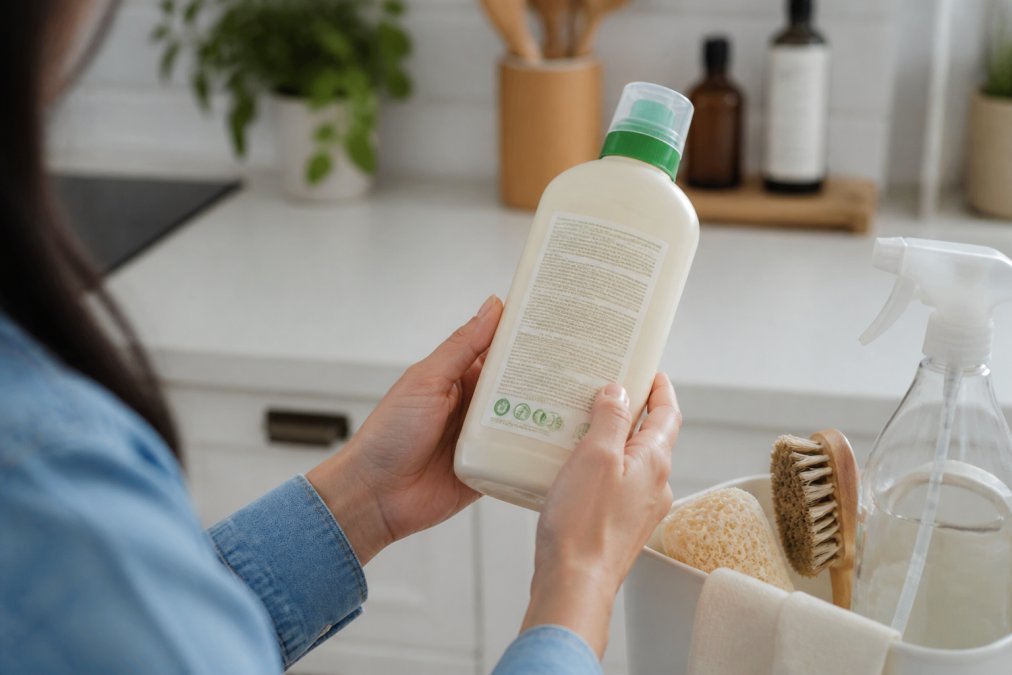
Learning how to read cleaning product labels is about finding the legally required safety information, not the marketing claims on the front. The front of a bottle might scream "Natural" or "Green," but the back label contains the details that tell you what is really inside.
Signal Words and Hazard Symbols
In Australia, cleaning products are regulated for safety, and the label must carry specific warnings. The signal word tells you how toxic the product is: "Caution" indicates a minor hazard, while "Warning" or "Danger" signals a higher risk of injury or corrosion. Hazard symbols, such as the corrosive icon, alert you to chemicals that can burn skin or eyes.
The Ingredient List and What It Actually Tells You
Unlike food, cleaning products are not required to list every single ingredient on the front label. However, the presence of certain terms is telling. If you see "surfactants" or "detergents" listed, these are the active cleaning agents. Terms like "acids" or "alkalis" tell you about the pH level, which affects what surfaces the product suits.
Toxic Ingredients in Cleaning Products to Avoid
Certain toxic ingredients in cleaning products to avoid are surprisingly common, even in products marketed as safe. You do not need a chemistry degree to spot them; you just need to know the names to look for, understand what they do, and recognise where they hide.
Phthalates
Phthalates are plasticisers and solvents that help fragrances linger. They are rarely listed on the ingredient panel because Australian labelling laws do not require manufacturers to disclose fragrance components; instead, they appear under "fragrance" or "parfum." Phthalates are endocrine disruptors, and the Australian Government's Department of Health has noted concerns about cumulative exposure from household sources. Choosing fragrance-free products is the most reliable way to avoid them.
Chlorine Bleach (Sodium Hypochlorite)
Chlorine bleach is a powerful oxidising agent that breaks down stains and disinfects by denaturing proteins. However, it is highly corrosive: at concentrations commonly found in household cleaners (typically 2-5%), it can cause irreversible eye damage and chemical burns (poison.org). Mixed with acidic cleaners or ammonia, it releases chlorine gas, which can cause severe respiratory distress. The Australian Poisons Information Centre receives thousands of calls each year about accidental bleach exposure. For routine disinfection, oxygen-based bleaches (hydrogen peroxide or sodium percarbonate) offer a safer alternative.
Ammonia
Ammonia is an alkaline gas dissolved in water to create a powerful degreaser. It works by saponifying fats, turning grease into soap, which is why it appears in many glass and multi-surface cleaners. However, ammonia vapour is a potent respiratory irritant, and undiluted ammonia can etch marble, tile grout, and some plastics. Never combine ammonia with chlorine bleach; the reaction produces toxic chloramine gas. For a degreaser, look for plant-based solvents like d-limonene or lauryl glucoside instead.
2-Butoxyethanol
2-Butoxyethanol is a glycol ether solvent used in many all-purpose, window, and floor cleaners. It dissolves both water-soluble and oil-soluble dirt, making it an effective "coupling agent." The concern is that it is readily absorbed through the skin and inhaled as a vapour. Animal studies have linked high exposure to blood cell abnormalities and reproductive effects, and the US Environmental Protection Agency classifies it as a possible human carcinogen (the EPA). In Australia, products containing more than 3% must carry a "Danger" signal word under GHS, but products below that threshold may only require "Caution" or "Warning." Check the ingredient list for "2-butoxyethanol," "butyl cellosolve," or "ethylene glycol monobutyl ether."
Formaldehyde and Formaldehyde Releasers
Formaldehyde is a colourless gas with a sharp odour, historically used as a preservative in water-based cleaning products. It is a known human carcinogen, classified by the International Agency for Research on Cancer (IARC) as Group 1. In Australia, its use in household cleaning products is restricted but not entirely banned. More insidious are "formaldehyde releasers", preservatives like quaternium-15, DMDM hydantoin, and imidazolidinyl urea, which slowly break down to release formaldehyde over the product's shelf life. These appear on ingredient lists under their chemical names, not as "formaldehyde."
A Quick-Scan Checklist for the Aisle
When you are standing in the cleaning aisle, use this mental checklist to screen out the worst offenders:
- Flip the bottle and read the full ingredient list, not just the front panel claims.
- Look for "fragrance" or "parfum", if present, phthalates may be hiding inside.
- Scan for the specific names above, 2-butoxyethanol, formaldehyde releasers, ammonia, sodium hypochlorite.
- Check the signal word, "Danger" or "Warning" indicates higher toxicity than "Caution."
- Choose fragrance-free and transparent labelling, if a brand lists every ingredient, it has less to hide.
This approach is especially important for households with children, pregnant women, or individuals with asthma, chemical sensitivities, or autoimmune conditions, for whom the cumulative burden of low-level exposure is a genuine concern.
Spotting Truly Eco Friendly Cleaning Products in Australia
Finding genuinely eco friendly cleaning products in Australia requires looking past the green leaves on the packaging. The term "green" is not legally defined, so any brand can slap it on a bottle. This is where understanding ecolabels and marketing language becomes essential.
The Problem: Greenwashing Is Everywhere
Greenwashing is the practice of making a product seem more environmentally friendly than it is. In the cleaning aisle, it takes several common forms:
- Vague buzzwords: Terms like "eco-conscious," "plant-based," "natural," and "earth-friendly" have no legal definition in Australian consumer law. A product can contain 2% plant-derived ingredients and still carry these claims.
- Irrelevant imagery: Green leaves, recycled-paper textures, and images of pristine forests are design choices, not certifications.
- Cherry-picked claims: A product might highlight that it is "phosphate-free" (which is legally required anyway) while containing other problematic ingredients.
- Self-declared ecolabels: Some brands create their own certification marks that look official but involve no third-party verification.
Under Australian Consumer Law, environmental claims must be truthful, accurate, and able to be substantiated. The ACCC has published guidance on green marketing and has taken enforcement action against misleading claims. However, it cannot police every label, so the responsibility falls on you.
How to Verify a Genuine Ecolabel
A genuine ecolabel is awarded by an independent third party that has assessed the product against published environmental standards. In Australia, the two most recognised ecolabels are:
- Good Environmental Choice Australia (GECA): GECA certification covers the entire product lifecycle, raw material extraction, manufacturing processes, packaging, and disposal. Products must meet strict criteria on toxicity, biodegradability, and ingredient transparency. You can search the GECA website for certified products by category.
- Australian Certified Organic (ACO): While primarily known for food, ACO also certifies personal care and household products that meet organic content standards.
International ecolabels like the EU Ecolabel and the Nordic Swan may also appear on imported products. The key question is always: Who awarded this label, and what did they test?
The Quick-Scan Guide for the Aisle
When you are standing in the cleaning aisle, you do not have time to research every product. Use this 30-second quick-scan instead:
- Look for a third-party ecolabel, GECA, ACO, EU Ecolabel, or Nordic Swan. If you see one, the product has been independently verified.
- If there is no ecolabel, read the ingredient list. Genuinely eco-friendly products typically list all ingredients in plain language. If you see vague terms like "surfactants" without specifying which ones, the brand is being opaque.
- Check the packaging. Is it recyclable in your council's kerbside system? Does the label say what the packaging is made from? A truly sustainable product will explain its packaging clearly.
- Look for specific environmental claims with specifics. "Biodegradable in 28 days" is more meaningful than "biodegradable." "Made with 100% renewable energy" is more meaningful than "eco-friendly."
- Be wary of "plant-based" without percentages. A product can claim to be plant-based while containing mostly synthetic ingredients. Look for products that state the percentage of plant-derived content.
The Hidden Trap: Fragrance and "Natural" Claims
A product can be genuinely eco-friendly in its cleaning agents but still contain synthetic fragrance mixtures that include phthalates or other sensitising compounds. The term "natural fragrance" is also unregulated, it can include essential oils (potent allergens for some) or synthetic compounds. For households with allergies or chemical sensitivities, the safest choice is a product that is both eco-certified and fragrance-free.
The Bottom Line
Identifying genuinely eco-friendly cleaning products is not about trusting the front of the bottle, it is about verifying the claims. A third-party ecolabel is the strongest single signal, followed by full ingredient transparency and specific, substantiated claims. When in doubt, choose the product that tells you exactly what is inside and how to dispose of the packaging.
Matching the Product to the Surface and the Job
Once you can identify what is in the bottle, the next step is choosing the right tool for the task. An acidic cleaner on a marble bench can cause etching, while a harsh abrasive will scratch stainless steel.
Here is a quick guide to matching the chemistry to the chore:
| Cleaning Job | Product Type | Key Ingredient | Surface Caution |
|---|---|---|---|
| Glass and mirrors | Glass cleaner | Spirit solvents or vinegar | Avoid on treated windows |
| Kitchen grease | Degreaser | Alkalis | Wear gloves, rinse well |
| Bathroom soap scum | Bathroom cleaner | Acids | Do not use on natural stone |
| General floors | All-purpose cleaner | Surfactants | Check for wood suitability |
| Daily counters | Mild detergent | Plant-based surfactants | Safe for most surfaces |
For a simpler routine, consolidating to a few multi-purpose products reduces clutter and decision fatigue, a key benefit for those seeking a calmer home environment.
Safe Storage and Disposal of Household Chemicals
Proper storage and disposal prevent accidents and protect the environment. Store all cleaning products in their original containers, out of reach of children, and away from direct sunlight or heat sources.
Never mix different cleaning products, as combining bleach with acidic cleaners releases toxic chlorine gas. When a product is expired or no longer needed, do not pour it down the drain or throw it in the bin. Check with your local council for household hazardous waste collection days, as many councils accept these items at dedicated drop-off points.
Conclusion: Build a Simpler, Safer Cleaning Routine
Identifying your cleaning products does not have to be a chore. By using the 5-5-5 Rule, reading the fine print, and understanding greenwashing, you can make informed choices that protect your health and the planet. The goal is not to become a chemist, but to build a routine that feels simple and safe.
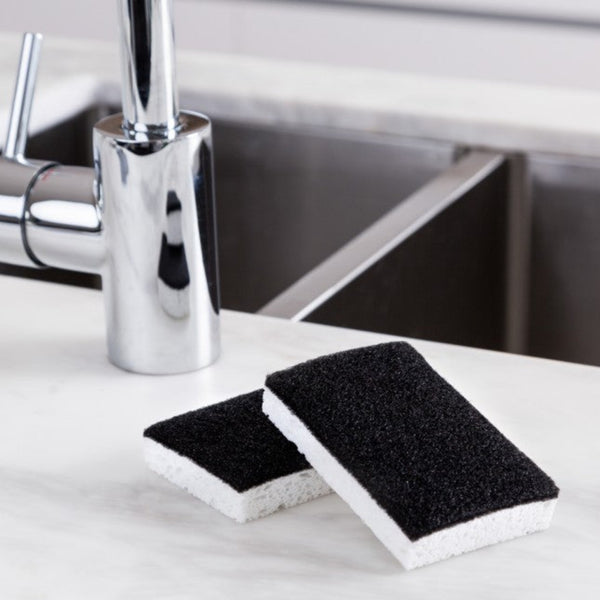
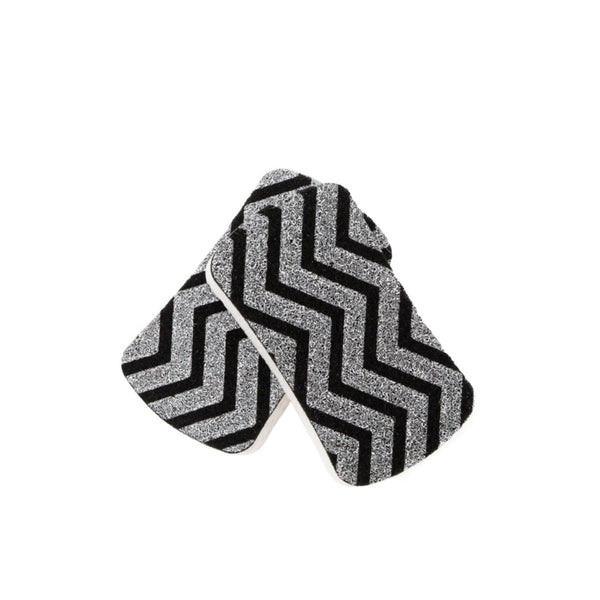
At Barkly Basics, we believe a cleaner home should be a calmer one. Our range of stylish, eco-friendly and plastic-free essentials is designed to simplify your daily routine, with clear labelling and a minimalist black and white aesthetic that reduces visual clutter. We also offer vision-friendly and braille-labelled products to help everyone in your household. Get started with Barkly Basics and build a more mindful cleaning routine today.
Frequently Asked Questions
What are the four main categories of household cleaning products?
Most household cleaning products fall into four categories based on their chemistry: detergents (surfactants that lift dirt and grease), degreasers and alkalis (for breaking down oils and proteins), acids (for removing mineral deposits like limescale and rust), and abrasives (physical scouring agents). Disinfectants and sanitisers are often added to these bases to kill germs. Knowing which category a product belongs to helps you identify whether it is safe for the surface you plan to clean and whether you need extra ventilation or protective gear.
What ingredients should I avoid in household cleaning products?
Look out for ingredients linked to health and environmental concerns. Common ones include sodium lauryl sulfate (SLS), chlorine bleach, ammonia, phthalates (often hidden under 'fragrance'), and synthetic dyes. Some products also contain nonylphenol ethoxylates or formaldehyde releasers, which can irritate skin and airways. Check the label for these names or their abbreviations. When in doubt, choose products with transparent ingredient lists or those carrying recognised Australian ecolabels, which restrict the use of many of these substances.
How can I tell if a cleaning product is truly eco-friendly?
Look beyond green packaging and words like 'natural' or 'green', which are not regulated in Australia. Seek third-party certifications such as Good Environmental Choice Australia (GECA). Check the full ingredient list for plant-based surfactants and no synthetic fragrances. Also consider the product's whole life cycle: is it concentrated to reduce shipping weight, sold in a refillable or recyclable container, and free from plastic packaging? These factors indicate a genuine commitment to sustainability rather than a marketing angle.
What is the difference between sanitising and disinfecting products?
Sanitisers reduce bacteria on surfaces to a safe level, as defined by the Australian standard, while disinfectants destroy or inactivate a broader range of microorganisms, including viruses and fungi. Check the label for a list of claims, such as 'Sanitises against E. coli' or 'Disinfects against Influenza A'. In Australia, disinfectants that make therapeutic claims may be regulated by the Therapeutic Goods Administration (TGA). For everyday household cleaning, a sanitiser is often sufficient, but in bathrooms or when someone is ill, a disinfectant is the appropriate choice.
Shop the full range of sustainable cleaning essentials.