Are Compostable Cleaning Products Actually Sustainable?
Table of Contents
- What Makes a Cleaning Product Truly Sustainable?
- Australian Standards for Compostable Packaging
- Best Practices for Home Composting Cleaning Sponges
- Frequently Asked Questions
Last Updated: September 13, 2026
What Makes a Cleaning Product Truly Sustainable?
A cleaning product is only truly sustainable when its ingredients break down safely, its packaging avoids single-use plastic, and its full life cycle, from manufacture to disposal, limits environmental impact. That definition matters because compostable cleaning products are often marketed as sustainable without meeting all three tests.
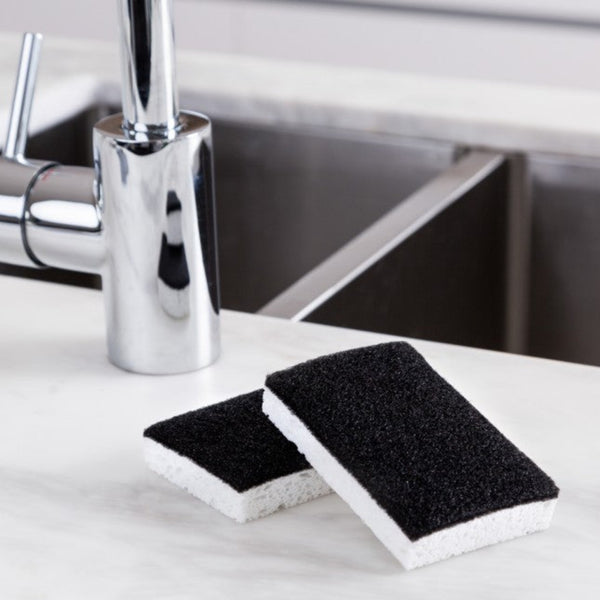
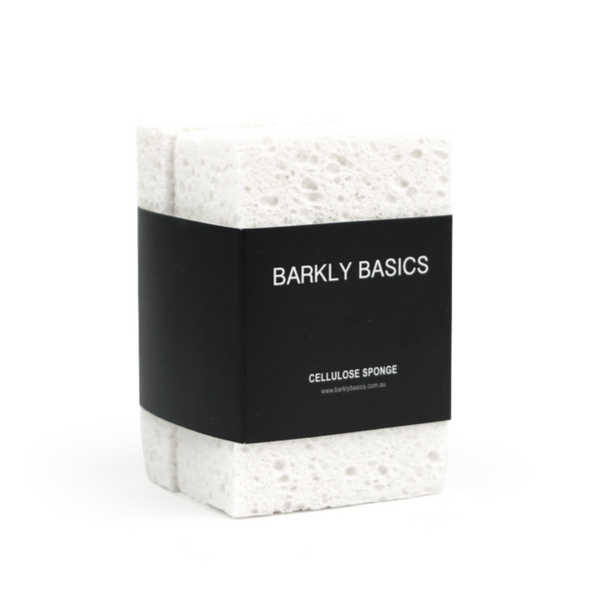
At Barkly Basics, we sell compostable sponges, cloths, and paper towel as part of our range. Below, we break down ingredients and home composting so you have a better understanding.
Ingredients: Plant-Based vs. Synthetic
Plant-based ingredients come from renewable sources such as cellulose, cotton, and plant-derived surfactants, and many biodegrade readily in soil or water. Synthetic ingredients are manufactured from petrochemicals, and some persist in the environment long after the bottle is empty.
Packaging
Packaging often outweighs the ingredient story. A bottle made from HDPE plastic can take centuries to break down, while a cellulose sponge can breakdown in soil over 30 days. Sustainable packaging means the wrapper, the box, and the item itself all avoid single-use plastic and either recycle or compost.

Australian Standards for Compostable Packaging
Australia's compostable packaging standards are set through the Australian Standard AS 4736 for industrial composting and AS 5810 for home composting, and products carrying these certifications have been tested for how completely and how quickly they break down. The voluntary Australian Standard for bioplastics, AS 4736, requires a product to disintegrate and biodegrade within a defined timeframe under controlled industrial conditions.
The distinction between the two standards is the one that trips people up. AS 4736 covers industrial composting, which relies on sustained high temperatures that contributes to its breakdown. AS 5810 covers home composting and is a natural biodegradation process.
Best Practices for Home Composting Cleaning Sponges
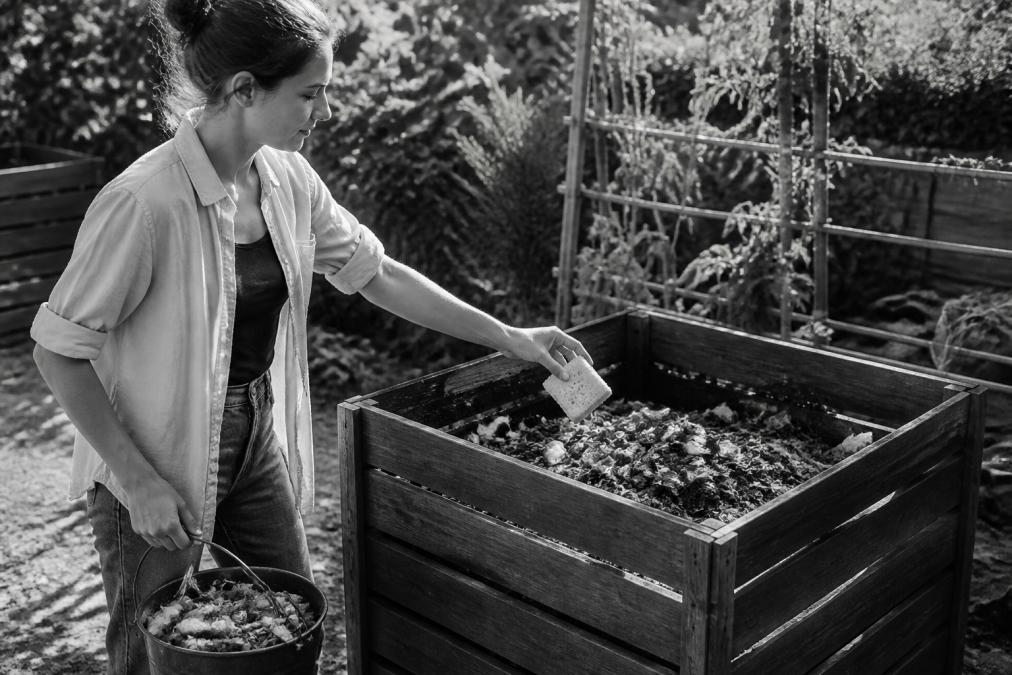
To compost cleaning sponges at home, cut them into smaller pieces to speed decomposition, and keep them in the active part of the pile rather than the edges. Sponges break down faster when they stay moist and are turned regularly with the rest of your organic waste.
A few habits make the difference:
- 1. Rinse sponges free of grease and detergent residue before composting.
- 2. Never compost sponges that contain synthetic fibres, even if the label says compostable.
- 3. Keep a separate small caddy for compostable cleaning items so they do not end up in landfill by habit.
- 4. Turn the pile weekly so the sponges stay in contact with active material.

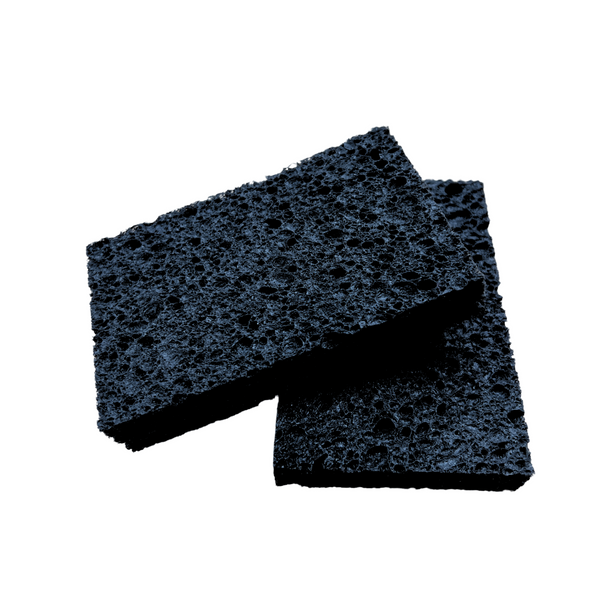
Deciding what is genuinely sustainable takes more than reading a label. Barkly Basics makes that easier with a range of compostable, plastic-free household essentials, including our Black Compressed Cellulose Sponge, our reusable Swedish Dish Cloth, and plastic-free Kitchen Paper Towel, all designed to simplify your routine and reduce waste. A portion of proceeds supports the Silent Sight Foundation, and our braille-labelled, vision-friendly design keeps every home accessible. Get started with Barkly Basics and build a cleaning routine you can actually trust.

Frequently Asked Questions
What is the difference between compostable and biodegradable cleaning products?
Compostable products must break down into non-toxic components within a specific timeframe and under defined conditions, often verified by standards like AS 4736 or AS 5810. Biodegradable simply means a product will eventually break down, but it could take years and leave behind residues. Compostable is a stricter, more verifiable claim, so look for certification logos to be sure.
Do compostable cleaning sponges break down in a home compost bin?
It depends on the material and your compost conditions. Sponges made from natural cellulose and cotton, like those from Barkly Basics, are designed to break down in a home compost bin, but they need the right balance of moisture, oxygen, and microorganisms. Cut them into smaller pieces and mix with other compostables to speed up the process. Avoid sponges with synthetic fibres or chemical treatments.